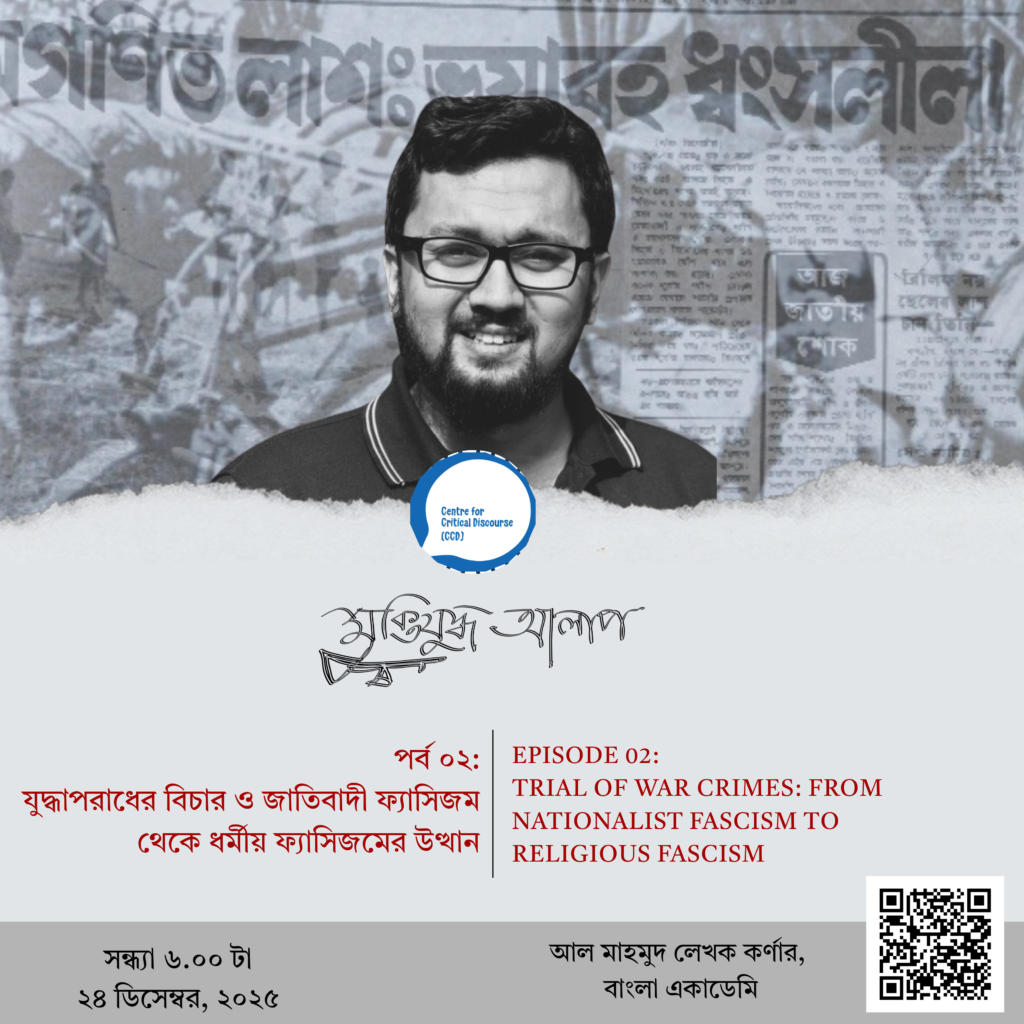
Historical archives show how historical narratives of the war are produced, curated and often instrumentalised to serve the dominant political parties’ ideological interests. “Muktijuddho-Alaap” is a critical consensus of collective resistance through narrative discourse. It claims back counter-hegemonic discourses of the silenced women, peasants, workers, subalterns, and the alternative history of politics during the liberation war.
This session, facilitated by Sohul Ahmed critically examined war crimes accountability in post-independence Bangladesh and the parallel rise of religious fascism. After the 1972 trials began with around 37,000 arrests, a 1973 general amnesty released nearly 26,000 accused without trial, reshaping the justice process. The interlinkage between procedural gaps of the judicial process in 2013 and the reestablishment of the banned Jamaat-e-Islami as a religious political force was explored through the session. The session traces how Jamaat and its affiliates endured through a “victimhood” narrative and re-emerged after the 2024 mass uprising, seeking renewed influence. It reflects on this resurgence, rising religious extremism, targeted violence, and challenges to democracy, secularism, and political accountability in Bangladesh.