




The world systems and social movements to apply provocations

Prison
Industrial
Complex

The term prison-industrial complex… signals the overlapping interests of government and industry that use surveillance, policing, and imprisonment as solutions to economic, social, and political problems.

Angela Davis

Prison Industrial Complex

Systemic Incarceration as State Political Control

The prison industrial complex in Bangladesh operates within a structural cycle in which poverty, political pressures, and economic inequalities drive individuals toward mass incarceration, while politically connected elites and dominant classes often escape punishment. In this context, the carceral system is not merely punitive but is strategically deployed to facilitate the mass detention of opposition leaders and activists, thereby suppressing dissent within the political sphere. Rooted in several colonial legal frameworks , prisons function as instruments of state control that categorise marginalized, subaltern, and proletarian populations as a “relative surplus population.” This systemic inequality, coupled with the absence of a meaningful reintegration process, perpetuates a vicious cycle of recidivism, reinforcing both social exclusion and continued incarceration.

Military
Industrial
Complex

Defense contractors, the military, and policymakers form a self-reinforcing network that drives foreign intervention and war for profit rather than security.

Noam Chomsky

Military Industrial Complex

Intersecting Military Power and Economic Enterprise

The Military-Industrial Complex (MIC) refers to the intertwined network of a nation’s military, government, and defense industries, where strategic, political, and economic interests converge. Scholars argue that this system incentivizes sustained militarization, prioritizing corporate profit and military expansion over democratic accountability or people’s needs. The MIC shapes public policy, defense spending, and imperialist interventions, often creating a self-reinforcing cycle where military solutions are favoured over diplomatic and human security. Critically, it can reinforce structural inequalities and shape national priorities through a right-wing ideological lens, highlighting intricate interplay between power, profit, and security.

In Bangladesh, the MIC is less about arms dominance and more about a state-centred network involving the government and selected economic institutions beyond defence. The country does not have a large private arms manufacturing sector like the U.S., but there is still a growing linkage between military institutions and military-affiliated enterprises (e.g., construction, logistics, manufacturing).

Labour
Movement

We knew the building was unsafe, but we were forced to work.

A worker’s testimony, Rana Plaza collapse
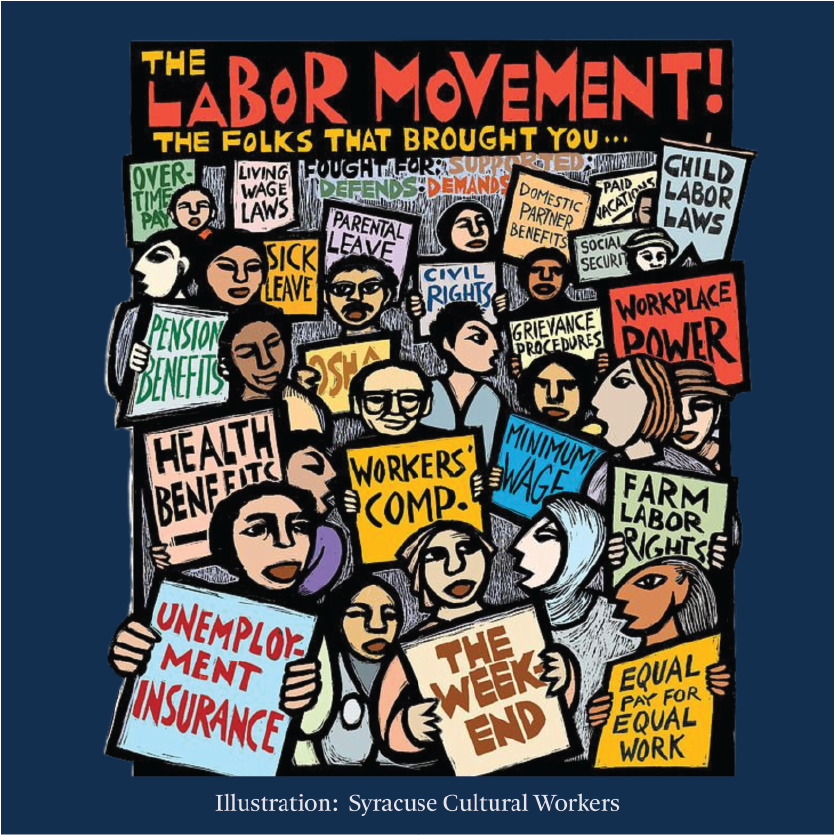
Labor
Movemnet

Confronting Capitalist Exploitation of Subaltern Labour

The labour movement in Bangladesh has developed within a historically entrenched structure of exploitation shaped by colonial legacies, uneven industrialisation, and the imperatives of global capitalism. Emerging from the struggles of jute mill and industrial workers during the colonial period and later within post-independence state industries, the movement has been reconfigured under neoliberal economic policies, shifting decisively toward the ready-made garments (RMG) sector.

In the contemporary context, the labour movement is deeply conditioned by the expansion of export-oriented industries, where workers predominantly women from rural and subaltern backgrounds, are systematically subjected to low wages, precarious conditions, and structural disempowerment. Trade unions remain weak and often co-opted, constrained by state regulation, political patronage, and employer repression. Labour resistance frequently emerges including spontaneous protests, strikes, and collective unrest, reflecting an ongoing struggle against capitalist exploitation and the commodification of labour.

Feminist
Movement

We must fight not only patriarchy, but also the class systems that sustain it, i.e. feudalism, capitalism, and imperialism. So fighting patriarchy means fighting against these exploiting classes.

Anuradha Ghandy

Feminist Movement

Dismantling Patriarchy and Systemic Class Exploitation

The rise of capitalism created conditions for the first collective, organized women’s movement, where women demanded rights and emancipation as a political force. While earlier women recognized oppression and expressed resistance through cultural forms (songs, myths, art), their efforts remained limited and often confined within religion or personal spirituality. With capitalism and the spread of democratic and liberal ideas, women especially from progressive classes, mobilized collectively. In places like South Asia, this movement developed within local social contradictions while being influenced by global feminist thought.

From the late 1960s onward, feminism deepened its critique by locating women’s oppression within systemic structures, particularly patriarchy and capitalism. Feminists exposed male bias in history, social sciences, and state institutions, while recovering women’s erased contributions. They also highlighted gendered labor exploitation and the economic benefits patriarchy provides to ruling classes.

The movement critically engaged with multiple philosophical traditions such as Marxism, liberalism, existentialism, and others while challenging their inherent male bias. Despite internal diversity and theoretical tensions, feminism has significantly expanded understanding of women’s oppression and contributed to broader struggles for democracy and socialism.

The
Environmental
Movement
and South
Asian
Agriculture

These forests are our mothers’ homes; we will protect them.

A historic slogan from Chipko Movement

The Environmental Movement and South Asian Agriculture

Reclaiming Agrarian Sovereignty from Capitalist Development

The Environmental Movement and South Asian Agriculture can be understood as a struggle against the ecological and social consequences of capitalist development in the agrarian sector. In South Asia, the expansion of industrial agriculture, driven by neoliberal policies and global market demands, has intensified land dispossession, ecological degradation, and the marginalisation of small farmers and rural labourers. Environmental movements in this region therefore emerge not only as efforts to protect nature, but as forms of resistance against corporate control over land, seeds, and the human body. From a critical perspective, these movements highlight the need for community-based agricultural practices that challenge exploitative economic structures or ‘treadmills of production’ and prioritise ecological justice and food sovereignty.

Anticipate
What is Next?
Contemporary
World

Capitalism will produce its own gravediggers.

Karl Marx

Contemporary World

Navigating Emerging Crises in Contemporary Society

‘Anticipate what’s next’ involves critically analysing ongoing conflicts and crises to understand how global capitalism adapts and restructures itself in response. Rather than viewing these conflicts as isolated events, this ground interprets them as sites through which new economic strategies, markets, and power relations emerge. It seeks to uncover what forms of exploitation, control, or commodification may be advanced next, while also recognising the possibilities for resistance and alternative futures.

Historical
Archive

The archive is first the law of what can be said, the system that governs the appearance of statements as unique events.

Michel Foucault
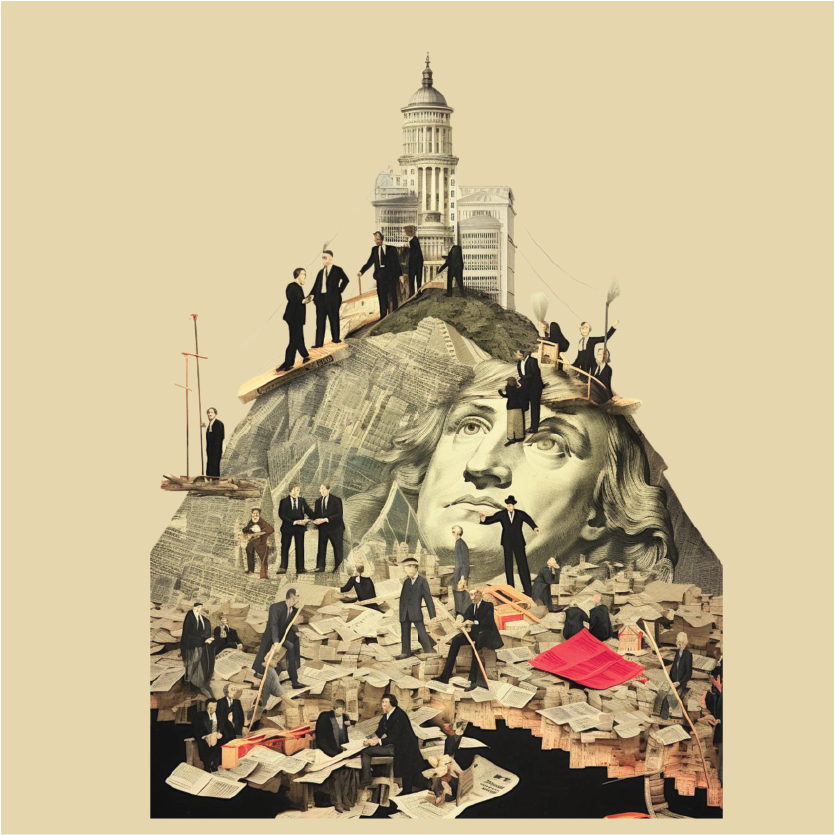

Historical Archiving

Preserving Subaltern Histories of Systemic Resistance

A historical archive is not a neutral repository of the past but a site of power where knowledge is produced, selected, and controlled. Archives often reflect the interests of dominant classes, preserving certain narratives while marginalising or silencing subaltern voices, including workers, peasants, and colonised populations. As such, archival practice becomes a political process, where the struggle is not only over what is remembered, but also over what is forgotten. Reclaiming and reinterpreting archives, therefore, is central to challenging repressive hegemonic histories and constructing more inclusive, people-centred accounts of the past.
© 2026 CCD | Designed & Developed by
INCODEX