To organize a movement that doesn't just treat symptoms but cures the disease, we must ground our struggle in Political Education. This isn't just "schooling"—it is a tool for liberation.
Political Education is the collective process of studying the social, economic, and historical forces that shape our lives. Unlike traditional education, which often teaches us to obey the status quo, political education is designed to unmask power. It is the bridge between personal suffering and systemic critique.
In the words of Paulo Freire, it is the development of conscientização (critical consciousness), the ability to perceive social, political, and economic contradictions and to take action against the oppressive elements of reality.
To dismantle the repression system, our political education must be rooted in these specific pillars:
We must study how the state uses the Prison Industrial Complex (PIC) to manage poverty and racial "surplus" populations through cages. Simultaneously, we analyze the Military Industrial Complex (MIC) to see how war is used as a profit engine, often testing weapons on marginalized bodies around the world."
Our education must highlight Ecological Imperialism. In South Asia, we study how the Green Revolution and corporate seed monopolies destroyed traditional farming. Political education here means reclaiming indigenous knowledge and understanding that "Climate Justice" is impossible without land redistribution and the dismantling of corporate agro-power.
History is a battleground. We study the Historical Archive not as a list of dates, but as a record of resistance. By uncovering the suppressed stories of peasant revolts, maroon societies, and anti-colonial uprisings, we remind ourselves that the "oppressed" have always been the protagonists of change.
We analyze the Labour Movement to understand how our time and bodies are commodified. We pair this with the Feminist Movement to recognize that the system relies on "unpaid reproductive labor" such as the cooking, cleaning, and caretaking, cheap labour mostly done by women, to keep the gears of capitalism turning.
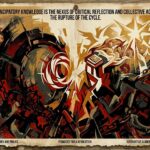
The liberation of oppressed peoples requires a disciplined commitment to Praxis—the reflexive cycle of theoretical analysis and grounded action. Theory provides the diagnostic tools to identify the root causes of systemic repression, while action tests the validity of those theories in the heat of struggle. Without theory, activism remains reactionary and fragmented; without action, theory remains an academic abstraction. Our framework insists on a continuous dialogue between the two: we analyze the world to change it, and we change the world to better understand it.
Alternative Academia represents a fundamental shift in the site of knowledge production. Traditional academic institutions often function as gatekeepers of the status quo, commodifying education and distancing it from the material realities of the marginalized. In contrast, Alternative Academia centers the "Ground of Struggle" as the primary laboratory of intellect. It validates the lived expertise of laborers, farmers, and organizers and peoples recognizing their historical archives and resistance strategies as essential scholarship. By decolonizing how we learn and who we learn from, we build an autonomous intellectual infrastructure capable of dismantling the prevailing systems of power.
To advance a movement of critical consciousness, we must master the tools of linguistic and systemic deconstruction. This begins with understanding the power of Discourse and the necessity of Debunking Discourse.
In a political and sociological context, Discourse is not merely a conversation; it is a structured system of language, symbols, visuals and knowledge that dictates what can be said, who can speak, and what is accepted as "truth" within a society. It is the invisible framework that shapes our perception of reality. For example, the "Development Discourse" often frames global South nations as "backward" to justify neo-colonial economic interventions. Discourse is the primary tool used by the center to maintain hegemony by making its specific interests appear universal and "natural."
Debunking Discourse is the intentional, critical process of exposing the internal contradictions, historical inaccuracies, and hidden power dynamics within dominant narratives. It involves a "hermeneutics of suspicion," an approach to reading the world that asks: Ke labhban hocche? (Who benefits?). To debunk a discourse is to peel back the layers of propaganda and "common sense" to reveal the underlying mechanisms of repression, such as the racial and class biases embedded within the legal, military, civil system.


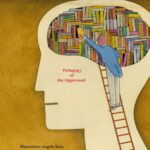
A People’s Library is more than a collection of books, it’s a democratized space of knowledge, dialogue, and resistance. Built by and for the community, it breaks the monopoly of elite-controlled learning by making critical texts, alternative narratives, and suppressed histories accessible to everyone. It functions as a hub for collective reading, discussion, and political consciousness-building, where ideas are not just consumed but contested and reimagined.
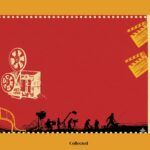
Cinema and Art, within CCD’s framework, are approached as instruments of the “Third Eye,” a critical lens that moves beyond passive spectatorship into analytical engagement. Here, cinema is not just narrative or aesthetics; it is a site of ideological production, where power, class, gender, and history are constructed and contested. Art, alongside it, becomes a method of decoding visual politics and re-signifying meaning.